momo
2021
Search Optimization: voice and recommended search
I designed voice search and recommended search for momo’s e-commerce app, helping shoppers find products faster despite complex categories and English brand names.

Overview
Making search faster for a huge catalog
In an e-commerce system, the search bar is where users click the most. A good search function can not only increase buying opportunities, but also make buying more efficient, so continuously improving it is an important task for any e-commerce platform.
In 2020, momo set out to add two features: voice search, built in cooperation with an external vendor, and recommended search, shown while users search and browse products. Together they were expected to increase browsing time and purchase efficiency.
The challenge
Voice search. On a platform with comprehensive products, the product classification is detailed and complex, which makes it hard to match what users say to a category. It gets harder when a brand or product name is in English, since the system has to identify it accurately from speech.
Recommended search. Because the classification is so complex, it is difficult to recommend the right category to shoppers. On top of that, the data showed users searched by "product classification" less often than expected on momo, so recommendation accuracy might not be high enough.
Research
Learning how other platforms teach voice search
Voice search through semantic understanding is still uncommon in Taiwan, so I studied several e-commerce platforms to find the key goals for the project.
What we learned
Teaching. Because the function is unfamiliar, guidance at the very beginning is critical to avoid shipping a feature nobody uses.
Explore guide. A guide helps users understand how to use the feature. It can also double as promotion by listing popular searches or a company's main products.
Waiting period. Most platforms keep listening for as long as the voice button is pressed, but stop searching after about 10 seconds of silence.
Competitor teardown
I compared how JD.com, Tmall and Taobao introduce voice search, noting what works and what doesn't.
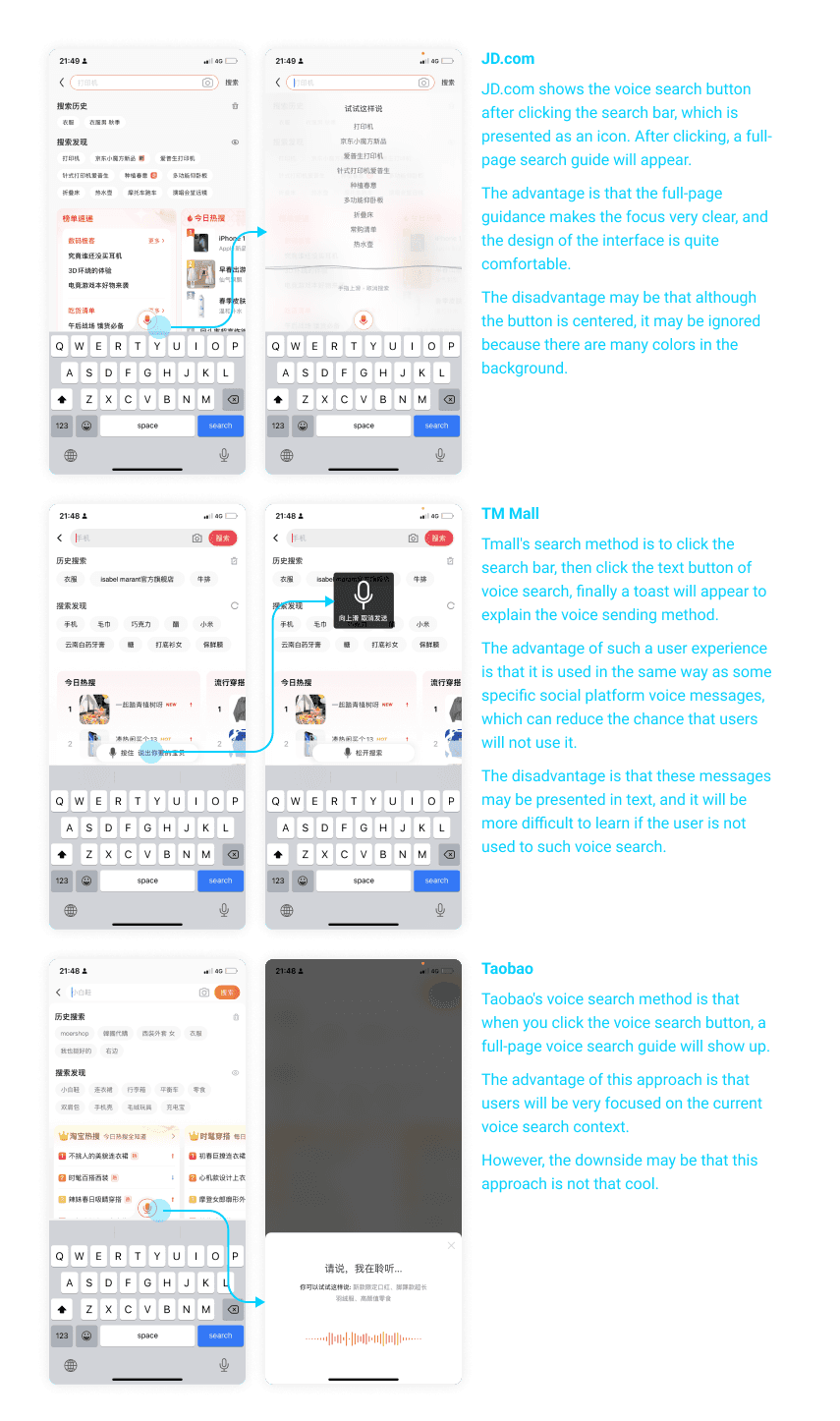
JD.com shows a voice icon after the search bar is tapped and opens a full-page guide. The focus is very clear, but the centered button can be overlooked against a busy, colorful background.
Tmall has users tap a text button, then press and hold, with a toast explaining how to send. It works like voice messages in social apps, which lowers the barrier, but the instructions are text-only and harder to learn for people unfamiliar with that pattern.
Taobao opens a full-page listening sheet when the icon is tapped, which keeps users focused on the voice context. The downside is that it feels less polished.
Design
Voice search that teaches itself
Design
Search recommendations that guide exploration
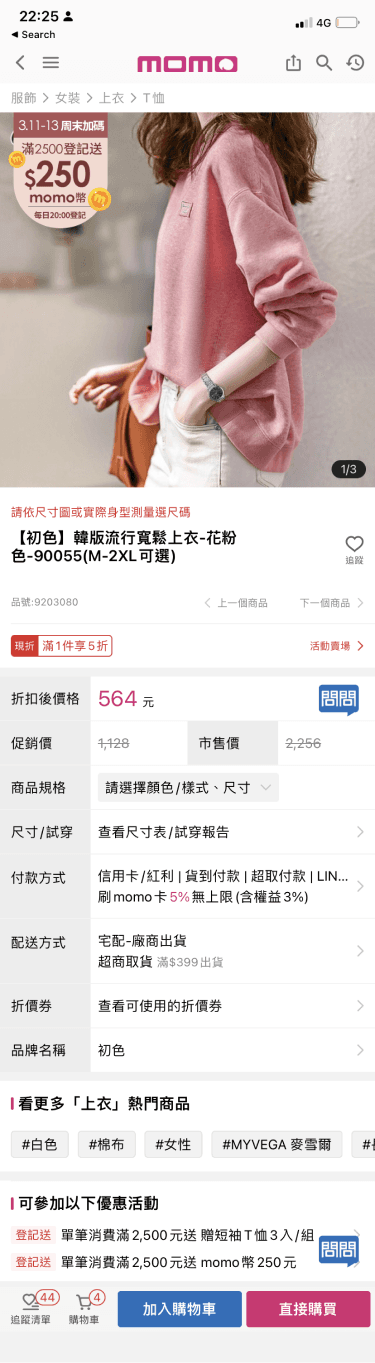
When a user types a keyword in the search bar, popular product attributes appear next to each suggestion. They come from the most frequently clicked products across many categories in the background data. Similar blocks appear on product pages.

This indirectly recommends the most popular category for a keyword and guides users to explore more kinds of products.
Reflection
What I learned
Naming voice search
So that users understand the feature directly, we named it "Voice Search". For us, though, it is really a showcase of semantic search.
Data-driven design
While designing search recommendations, I worked with the Data Team and asked engineers to pull click data from the platform. That is when I learned the product classification we had spent so much time on was not getting many clicks. That turned out to be useful feedback: results were weak, so there was plenty of room to show users our careful classification and help them explore the platform.
What happened next
These features were scheduled late in development, and I left momo after launch, so I can't measure their real effect. I heard that voice search is still elusive but interesting, and that recommended search is very easy to use, though more personalized content would make it better. I'll carry that feedback into future projects.


